
Carrier scorecards, automated
Eliminate manual reporting and give carriers direct access to real-time performance data. With GoodShip, shippers and carriers work from the same information to identify issues, improve service, and make better transportation decisions.
Request a Demo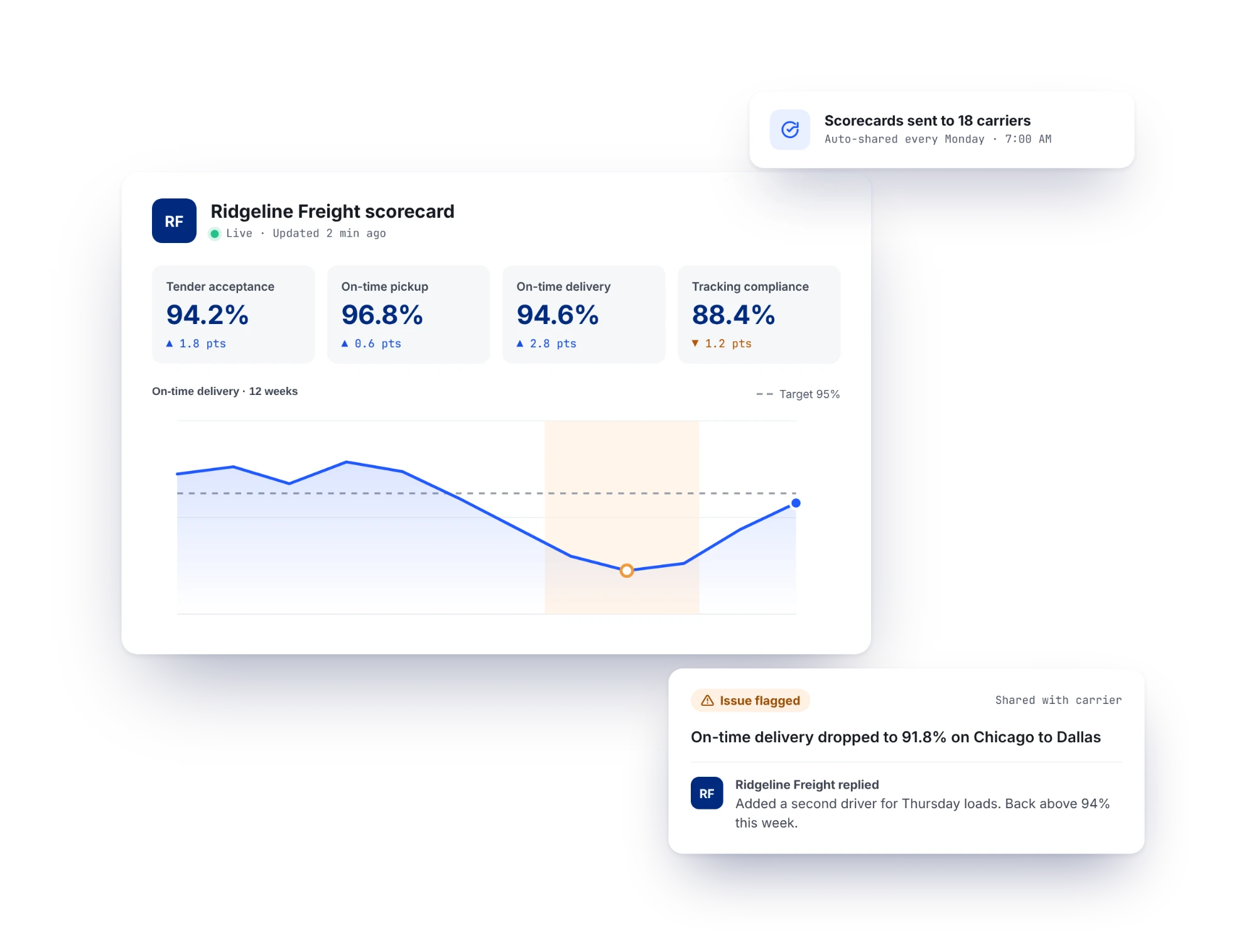
Traditional scorecards fall short
Too much work, too late
Preparing carrier scorecards takes hours of manual work, and by the time reports reach carriers, the information may already be outdated.
Averages hide the real problem
High-level scores don’t always reveal which lanes or loads are driving poor performance, making it harder to address issues.
Different versions of the truth
When shippers and carriers work from different data, valuable time is spent debating discrepancies instead of identifying and resolving performance issues.
Carrier scorecards that keep themselves up to date
Remove the manual work
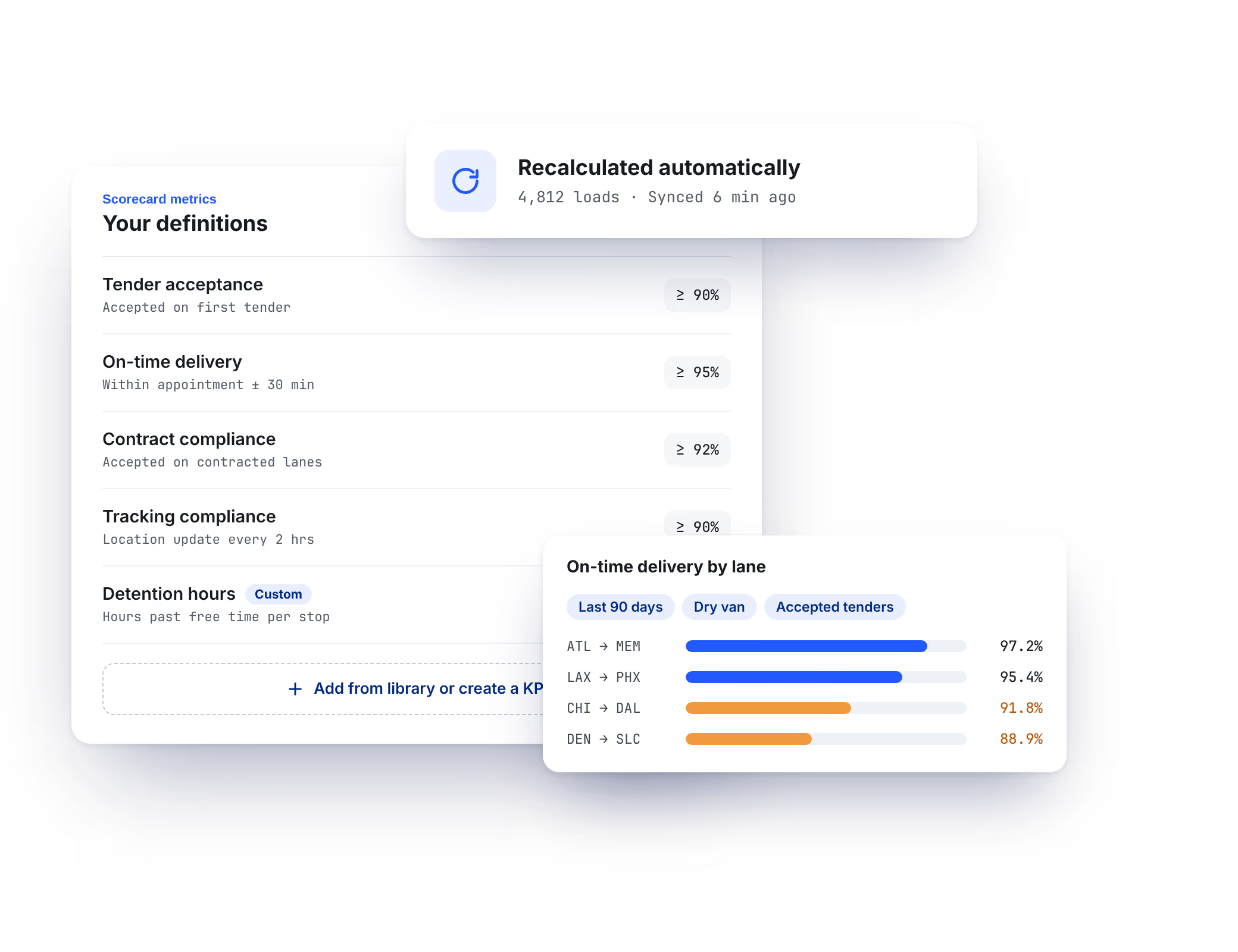
GoodShip automatically calculates carrier performance using your definitions and existing transportation data, keeping scorecards up to date without the manual effort.
- —Performance tracking: Monitor tender acceptance, on-time delivery, contract compliance, and other key metrics against your targets.
- —Customizable scorecards: Choose from a library of built-in metrics or create custom KPIs tailored to your business.
- —Detailed performance insights: Go beyond averages to analyze performance by lane, load, or tender, with filters for date, equipment type, and tender status.
Give carriers what they need
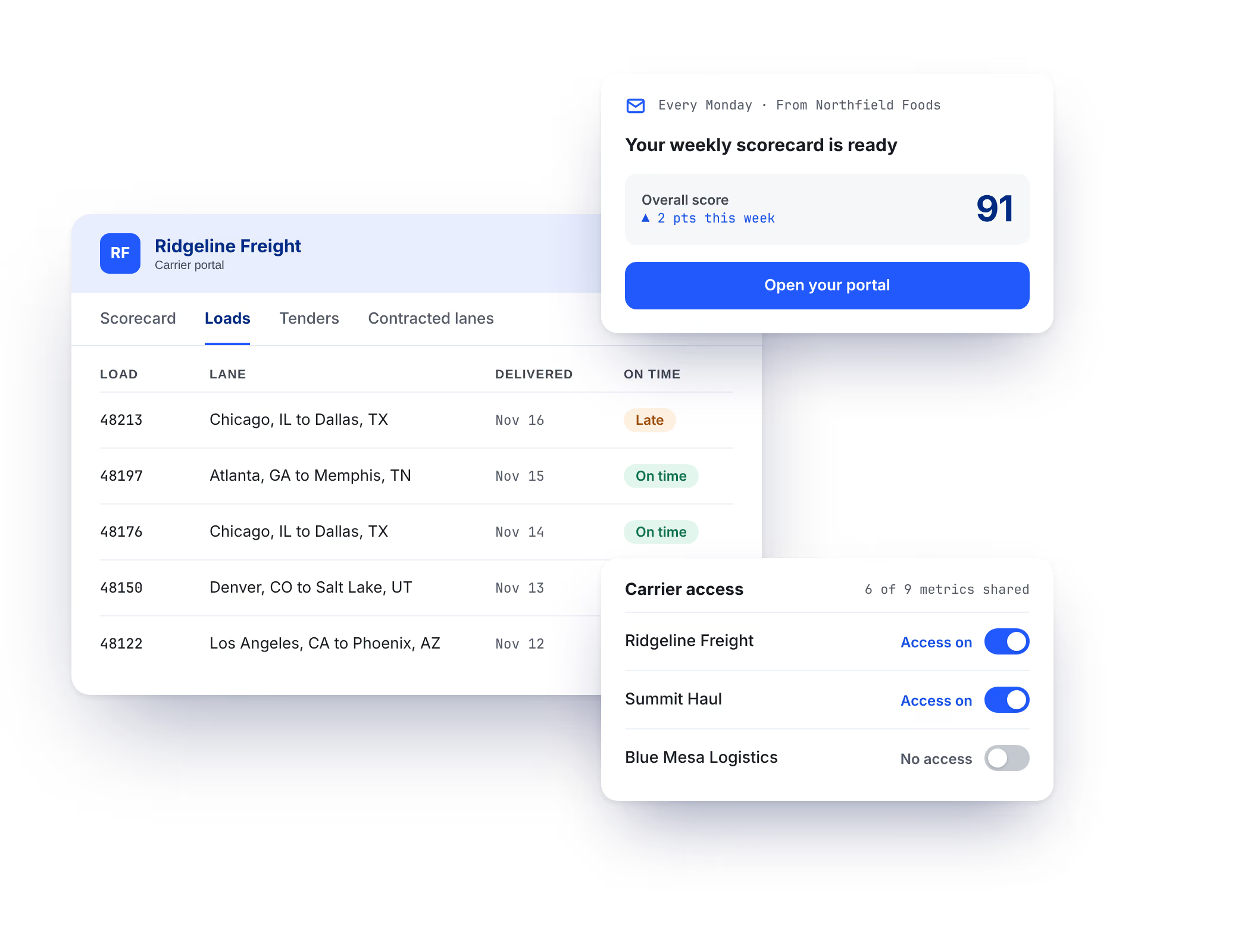
Carriers can log into their own portal to access their performance data, including the loads, tenders, and contracted lanes behind their scores.
- —Self-serve carrier portal: Give carriers direct access to their performance information anytime.
- —Automated weekly updates: Keep carriers informed with recurring scorecard emails that link directly to their portal.
- —Flexible access controls: Customize which metrics carriers see and control which carriers have access.
Resolve issues faster, together
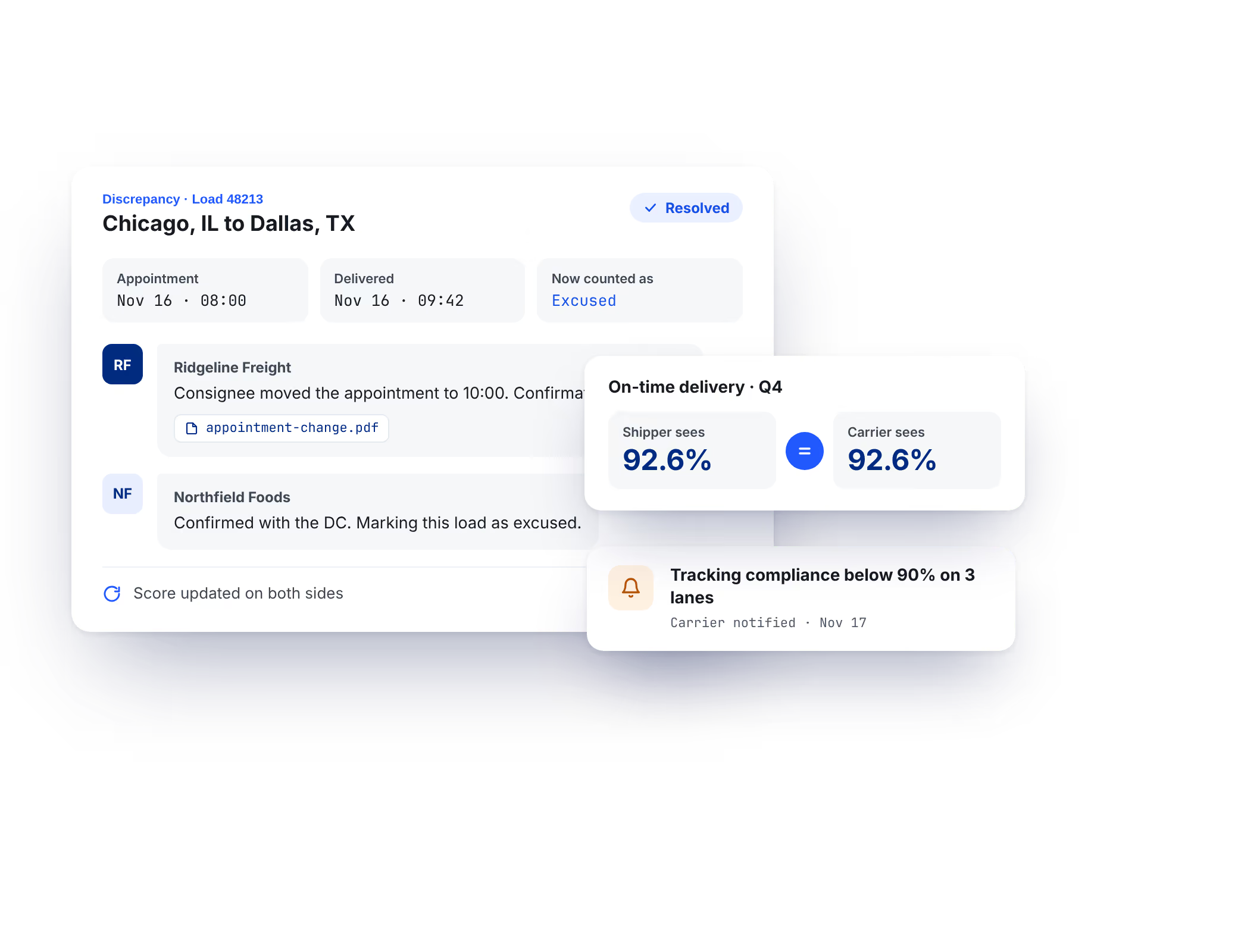
Work directly with your carriers to identify performance issues, resolve discrepancies, and improve service using a shared view of the performance data.
- —One shared source of truth: Keep everyone aligned on performance metrics and calculations, reducing disputes over conflicting data.
- —In-platform collaboration: Discuss performance issues, investigate discrepancies, and resolve disputes directly within GoodShip.
- —Proactive issue resolution: Identify and address service problems as they arise instead of waiting for the next quarterly review.
Make better procurement decisions
Bring carrier performance history directly into procurement to make more informed decisions about rates, service, and capacity.
- —Performance-driven sourcing: Evaluate carriers using historical service performance and reliability alongside pricing.
- —Contract and volume visibility: Compare carrier performance against contracted lanes, volume commitments, and actual tender activity.
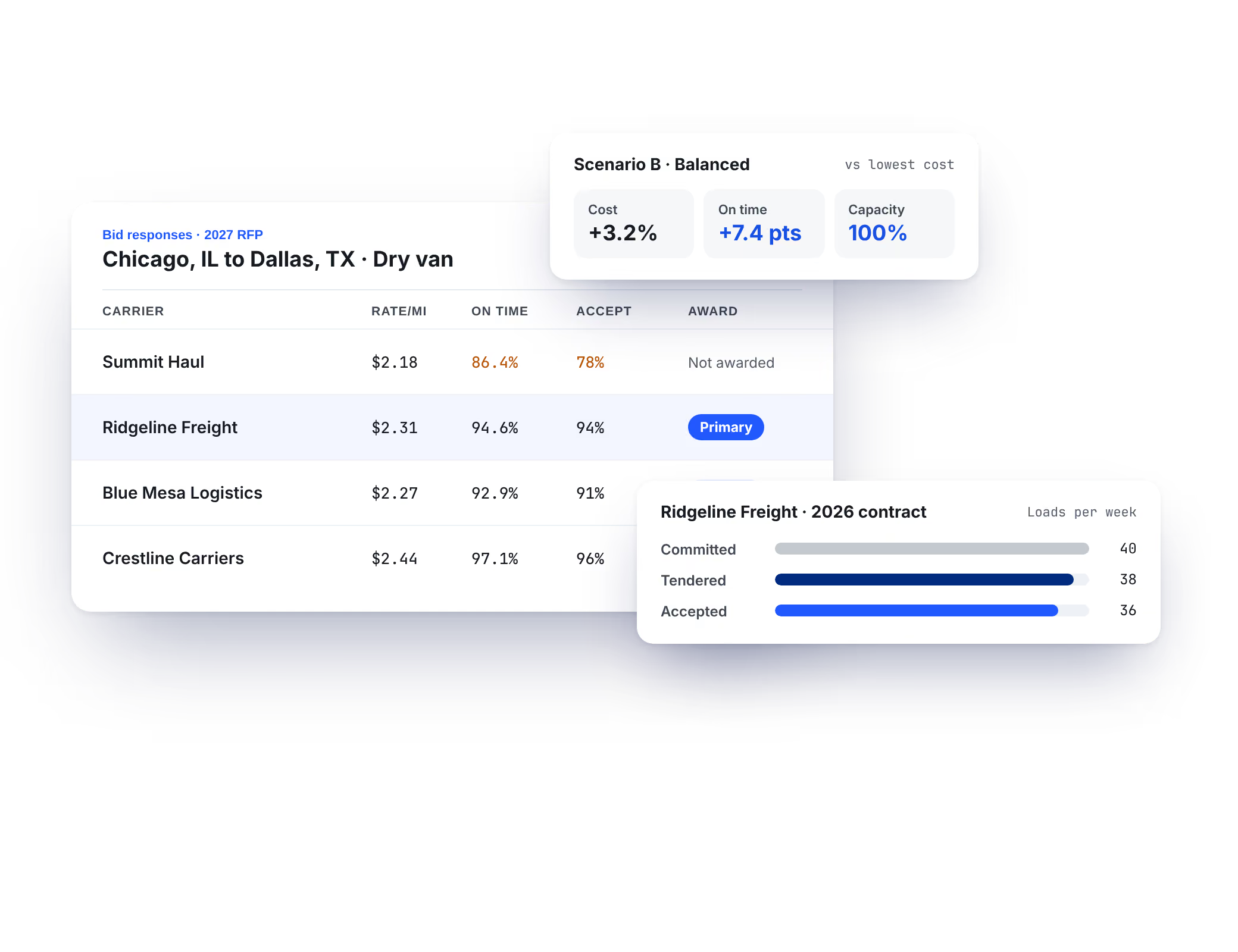
- —More informed awards: Use performance data when evaluating carrier responses and modeling award scenarios to balance cost, service, and capacity.
“More pointed conversations with carriers.”
“We use GoodShip to bring all our data together so we can have more pointed conversations with carriers, making sure they’re in the right place, hitting their KPIs, and the right fit for our network.”

“The ability to move faster.”
“100% GoodShip has brought us the ability to move faster with our decision making and our communication to our carriers.”

Want to dig deeper?
Just ask Laney. Your AI Transportation Analyst can tackle more complex questions, analyze performance trends, compare carriers across lanes, and uncover patterns and opportunities across your network using natural language.
Meet Laney
Frequently Asked Questions
What is a carrier scorecard?
A carrier scorecard measures how each carrier performs against your service targets, using metrics like tender acceptance, on-time pickup, on-time delivery, and contract compliance. In GoodShip, scorecards are calculated automatically from your existing transportation data, so they stay current instead of being rebuilt by hand each quarter.
Which metrics can GoodShip scorecards track?
Tender acceptance, on-time pickup, on-time delivery, tracking compliance, and contract compliance are built in. You can also create custom KPIs with your own definitions and targets. By default, a carrier shows green at 90% or higher for on-time pickup, on-time delivery, and tender acceptance, and those thresholds can be adjusted.
Can carriers see their own scorecards?
Yes, and it’s free for them. Carriers log into their own GoodShip portal to see their scores and the loads, tenders, and contracted lanes behind them, any time, not just at the quarterly review. You control which metrics carriers see and which carriers have access, and GoodShip can send carriers automated weekly scorecard emails. GoodShip manages carrier onboarding as part of implementation.
Can GoodShip tell the difference between a carrier being late and a receiver causing it?
Yes. GoodShip separates carrier-controllable lateness from customer- and shipper-caused lateness, and measures on-time performance against the appointment and against the must-arrive-by date, so scorecard conversations with carriers stay grounded in what they actually control.
How often are scorecards updated?
Scorecards recalculate automatically as new data comes in from your transportation systems, so you and your carriers see current performance rather than a monthly or quarterly snapshot. Admins can also set the default look-back period for scorecards.
Do we need to replace our TMS?
No. GoodShip works alongside your existing TMS and works with all major TMS providers, so scorecards are built from the transportation data you already have.
Can scorecards be used in RFPs and carrier awards?
Yes. Carrier performance history flows directly into GoodShip procurement, so you can evaluate bids using historical service and reliability alongside price, and model award scenarios that balance cost, service, and capacity.
Better performance starts with a shared view
Give your team and carriers the visibility they need to continuously improve performance.
Request a Demo


