
How Transportation Teams Use AI to Reduce Costs and Improve Visibility
Director of Growth Marketing at GoodShip
Most transportation teams don’t have a cost problem, they have a visibility problem. On paper, procurement looks optimized. Rates are negotiated, carriers are selected, and systems are in place. But in practice, costs creep in during execution through delays, missed signals, and fragmented data. AI in transportation management is not just about automation. It’s about making operations observable, explainable, and actionable in real time.
What AI in Transportation Management Actually Means
AI in transportation is often misunderstood as forecasting or routing optimization. In reality, its biggest impact is much more operational.
AI acts as a layer that:
- Connects data across TMS, carriers, brokers, and internal systems
- Answers questions instantly (e.g., “Why did this load cost more?”)
- Identifies actions before issues escalate
Where Transportation Teams Lose Money Today
The biggest misconception in logistics is that savings come from better procurement.
In reality:
Most overspend happens after the RFP during execution.
Common sources of hidden cost include:
- Accessorial charges that aren’t flagged early
- Carrier performance issues that go unnoticed
- Delays that compound across the network
- Manual audits that happen too late to fix root causes
These aren’t strategy problems, they’re visibility gaps.
How AI Improves Transportation Execution
AI helps transportation teams move from reactive to proactive operations.
1. Real-time monitoring of shipment execution
AI continuously analyzes shipment data and flags anomalies:
- Unexpected cost changes
- Route deviations
- Timing inconsistencies
Instead of discovering issues post-mortem, teams can act immediately.
2. Automated root-cause analysis
Instead of digging through spreadsheets, AI can explain:
- Why a shipment cost more
- Which carriers are underperforming
- Where process breakdowns occur
This turns hours of analysis into seconds.
3. Faster, data-driven decisions
When data is unified and interpreted in real time, teams can:
- Resolve exceptions faster
- Prioritize high-impact issues
- Reduce manual back-and-forth
This is where AI replaces not just labor—but latency in decision-making.
Why DIY AI Workflows Fall Short
Many teams experiment with tools like ChatGPT or internal dashboards.
While useful, these approaches often break down because:
- Data is still fragmented across systems
- Context is missing or inconsistent
- Workflows aren’t embedded into daily operations
AI only works if it sits directly on top of unified, operational data.
How GoodShip Applies AI to Transportation Management
Platforms like GoodShip are designed specifically for transportation workflows, not generic AI use.
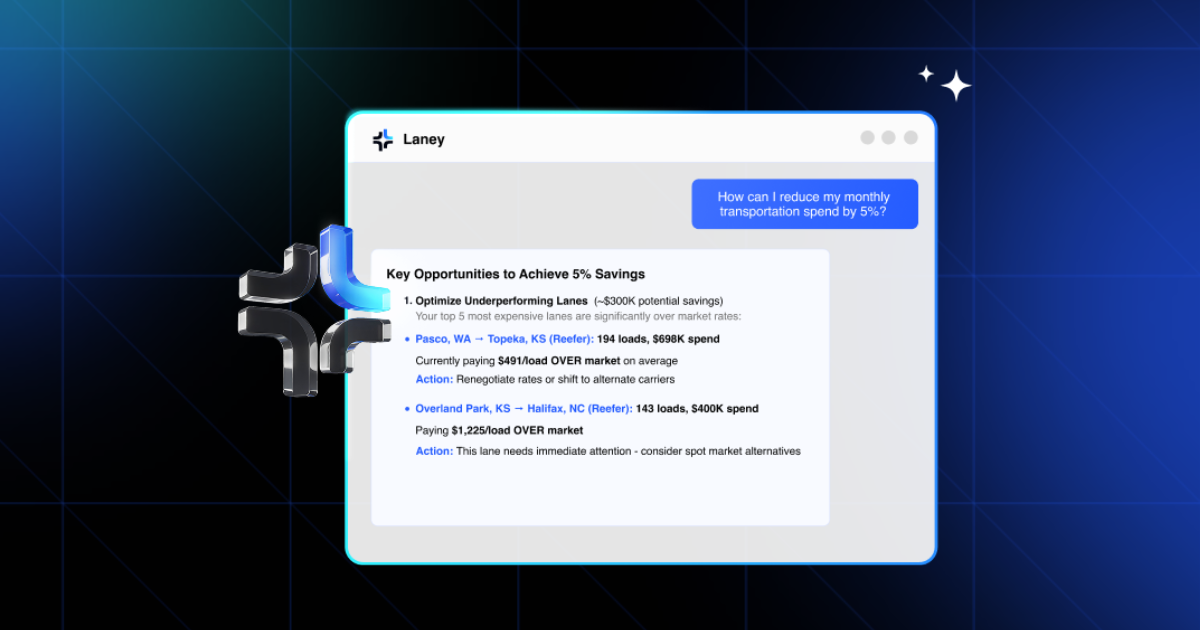
GoodShip’s Laney AI connects directly to your transportation data and enables teams to:
- Ask operational questions in plain language
- Detect cost anomalies automatically
- Monitor execution across all shipments in real time
Instead of building workflows from scratch, teams get immediate, production-ready intelligence.
Key Takeaways
AI in transportation management is not about replacing systems, it’s about making them usable.
The real opportunity is not in better planning, but in better execution:
- Seeing issues earlier
- Understanding them instantly
- Acting before costs accumulate


